What is LinkCode
LinkCode is a desktop app that runs Claude Code, Codex, OpenCode, Pi, and Grok Build on your own machine, giving them one shared interface with live threads, approvals, and workspace tools.
LinkCode gives Claude Code, Codex, OpenCode, Pi, and Grok Build one consistent desktop interface. The app carries a host (the LinkCode daemon) that starts with it, and agents run there against your real workspace — your code and credentials stay on your machine.
Start with the quickstart
Install the app and run your first thread.
Download the desktop app
Get LinkCode for macOS, Windows, or Linux.
Desktop app
One interface for threads, approvals, and workspace tools.
Local host
Owns credentials, workspaces, and agent processes on your machine.
Coding agents
Claude Code, Codex, OpenCode, Pi, and Grok Build work through the same model.
One thread, every tool in context
Each thread lives on the host rather than inside a UI panel. The conversation, tool activity, changed files, and workspace panels therefore stay tied to the same agent run as you work.
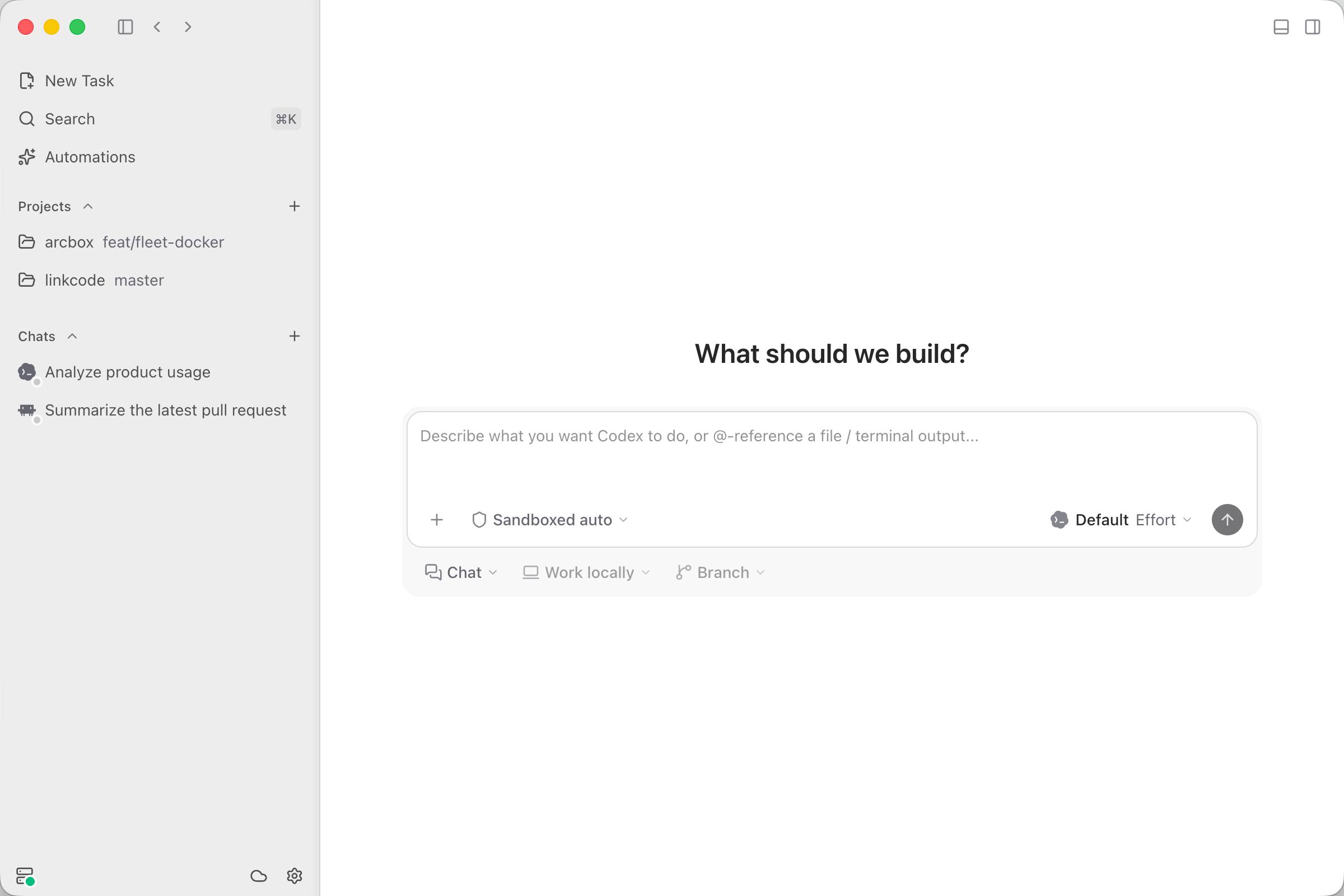
What you can do
- Switch agents without switching interfaces. Start with the agent that fits the task while keeping the same thread and workspace controls.
- Decide how much each agent may do on its own. Every agent exposes an approval policy, from asking before every command to running unattended.
- Follow work as it happens. See messages, tool activity, permission requests, and rich diffs instead of reconstructing a run from terminal output.
- Keep the workspace close. Inspect changes, open produced files and previews, drive an iOS Simulator, and use the built-in terminal — all next to the conversation.
Platform support
LinkCode ships for macOS, Windows, and Linux, built separately for Intel/x86_64 and Apple Silicon/arm64. The host runs inside the app, so there is nothing else to install.
Where to start
Quickstart
Install the app, set up an agent, and run your first thread.
Choose an agent
Compare setup, sign-in, approvals, models, and resume.
Understand the architecture
See how the desktop app, host, agents, and workspaces fit together.
LinkCode is source-available under the Business Source License 1.1 (BUSL-1.1).